Getting Started · November 19, 2026
CDL Requirements in 2026: Documents, Green Card, Work Permit and Who Qualifies
A complete, up-to-date checklist of what you need to get a CDL in 2026, including which immigration documents are accepted and which are not.
As of 2026, the rules for who can get a commercial driver's license changed more than at any time in the last decade. FMCSA's non-domiciled CDL final rule took effect March 16, 2026, English proficiency is enforced at roadside inspections, and states must verify immigration status electronically. This guide walks through every requirement so you can show up to the Motor Vehicle office prepared.
Basic eligibility
Federal rules in 49 CFR 383.71 set the minimum requirements for a Commercial Learner's Permit (CLP) and CDL:
- Be at least 18 years old to drive within your state, and 21 to drive across state lines or haul hazardous materials.
- Hold a valid, non-commercial driver's license (in New Jersey, a basic Class D license).
- Live in the state where you apply (proof of domicile).
- Pass a DOT physical and carry a valid Medical Examiner's Certificate.
- Read and speak English well enough to talk with officials, understand road signs and fill out reports.
- Not be disqualified or hold a driver's license from more than one state.
Documents you need to bring
Bring originals, not copies. Birth certificates must be certified with a raised seal. Typically you'll need:
- Proof of identity and age (for example, U.S. passport or certified birth certificate).
- Proof of U.S. citizenship or lawful permanent residency (see the next section).
- Your Social Security card or proof of your Social Security number.
- Two proofs of address in your state (utility bill, bank statement, lease, etc.).
- Your current driver's license.
- DOT Medical Examiner's Certificate (Form MCSA-5876) and medical self-certification.
- New Jersey applicants also follow the MVC 6 Points of ID verification.
U.S. citizens: what counts as proof
Any one of these documents proves citizenship: an unexpired U.S. passport or passport card, a certified U.S. birth certificate (including Puerto Rico, Guam, U.S. Virgin Islands, American Samoa and Northern Mariana Islands), a Consular Report of Birth Abroad, a Certificate of Naturalization (N-550) or a Certificate of Citizenship (N-560/N-561).
Green card holders: you can get a standard CDL
If you're a lawful permanent resident, your unexpired Permanent Resident Card (Form I-551, the green card) is accepted proof. Green card holders who live in the state are eligible for a regular CDL, exactly like citizens, as long as they meet all other requirements. Make sure your card is not expired before your appointment.
Work permit (EAD): no longer accepted for a CDL
This is the biggest change. Under the 2026 rule, an Employment Authorization Document (EAD, Form I-766, often called a work permit) is no longer an acceptable document to get a CLP or CDL, even if it is valid and unexpired. That means asylum seekers, refugees, DACA recipients, TPS holders and others who previously qualified with an EAD can no longer obtain a non-domiciled CDL. A valid work permit still lets you work legally in other jobs, but it does not open the door to a commercial license.
Who can still get a non-domiciled CDL
Only foreign nationals in one of three employment-based visa categories qualify:
- H-2A: temporary agricultural workers.
- H-2B: temporary non-agricultural workers.
- E-2: treaty investors (the E-2S spouse category does not qualify).
What visa holders must show
Eligible applicants must present an unexpired foreign passport and an unexpired Form I-94/I-94A showing the H-2A, H-2B or E-2 status at every issuance, renewal, transfer or upgrade. States check status through the federal SAVE system, transactions must be in person, and the license cannot last longer than the I-94 or one year, whichever is shorter.
Training and testing steps
Once your documents are in order, the path is the same for everyone:
- Complete ELDT theory with a provider on FMCSA's Training Provider Registry (80% minimum score).
- Pass the written knowledge tests and receive your CLP.
- Hold your CLP for at least 14 days.
- Complete ELDT behind-the-wheel training in the yard and on the road.
- Pass the skills test: pre-trip inspection, basic control and road test.
Other 2026 rules to know
English proficiency is now an out-of-service violation at roadside inspections. Drivers with a 'prohibited' status in the Drug and Alcohol Clearinghouse have their CDL downgraded until they complete return-to-duty. And employers must check the Clearinghouse before hiring you.
Not sure if you qualify? Ask us first
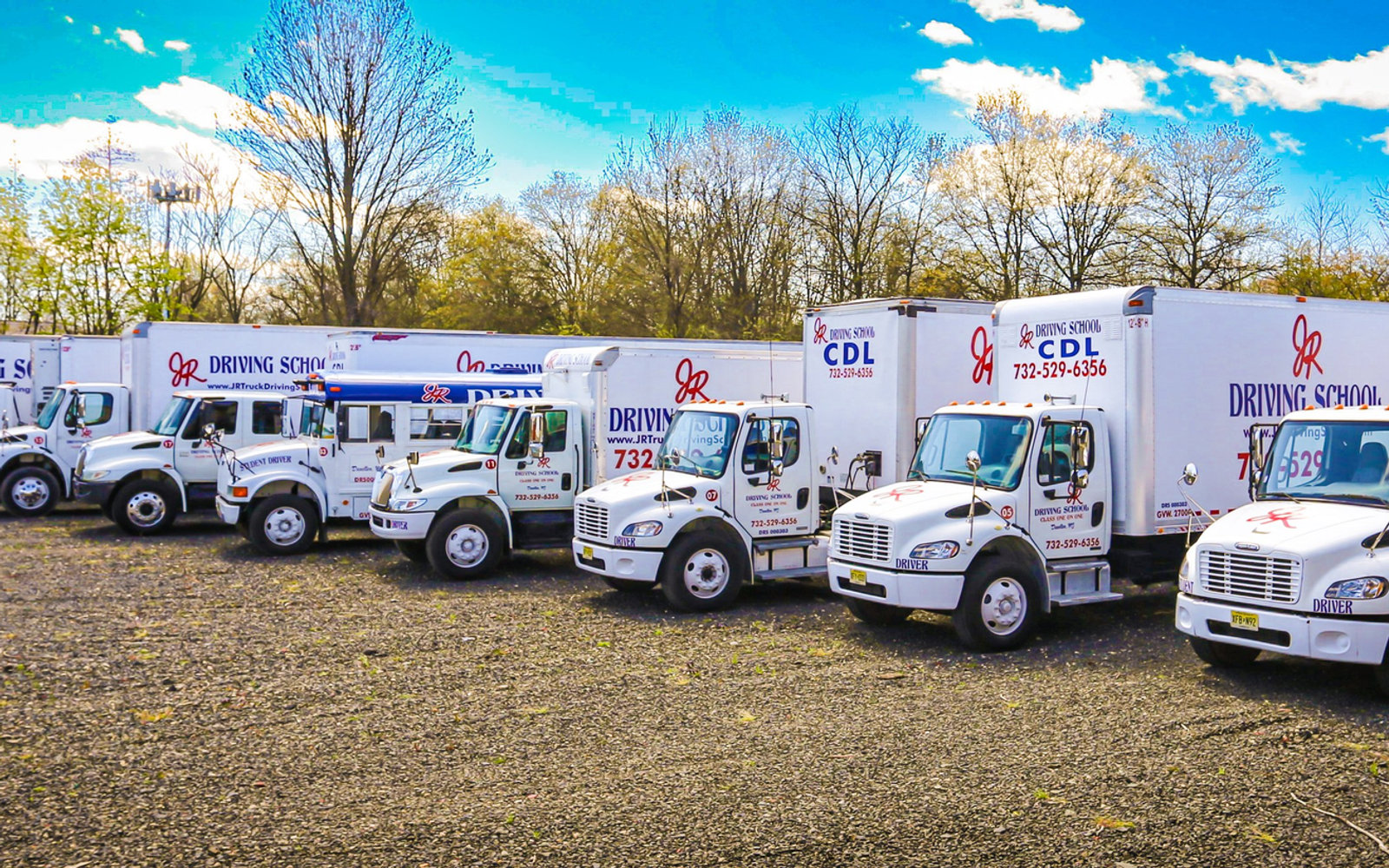
Before you pay for training, call JR Driving School. Our bilingual staff will review your documents with you, in English or Spanish, so you know exactly where you stand with the MVC.
Sources
- FMCSA Non-Domiciled CDL 2026 Final Rule FAQs
- Federal Register: Non-Domiciled CDL Final Rule (Feb 13, 2026)
- eCFR 49 CFR 383.71: Driver application procedures
- Mass.gov: Non-Domiciled Commercial Program
- NJ MVC Commercial Driver License
This article is general information, not legal advice. Rules can change; check official sources.